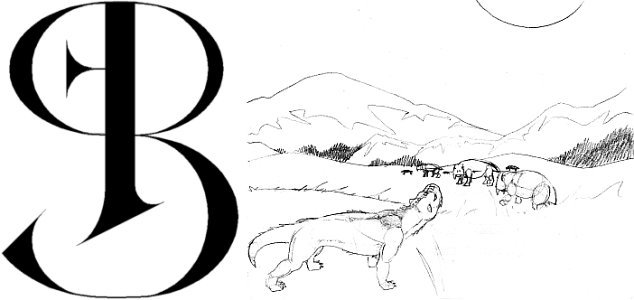
 In the Squawk Role-Playing Game, gygeans are intelligent crocodilians with the ability to change skin color and pattern rapidly like octopus, squid and cuttlefish. In spite of the difficulty of depicting this ability in action, Gygeans are one of our most illustrated Squawk species.
Two gygean features are coincidentally found in that other dinosaur science fiction franchise, Jurassic Park. The late author of the Jurassic Park books, Michael Crichton, hints in the original novel that the velociraptors have some active camouflage ability like a chameleon. (In real life, velociraptors were covered in feathers like a bird.) In the second book he gives the Carnotaurus an even more dramatic camouflage which makes them nearly invisible when they hunt at night.
In the movie adaptation of Jurassic Park, Steven Spielberg gives the Dilophosaurus a neck frill which can be erected. This feature is present in the real-life Frilled Dragon and some of the Squawk gygeans. The creators of the movie knew that the real life Dilophosaurus almost certainly did not have this frill (or the ability to spit poison) but including these features in their fictional dinosaurs is an homage the revelations that come as we learn more about prehistoric life.
More pictures and information about gygeans:


