In the
Squawk Role-Playing Game,
Manticores are intelligent
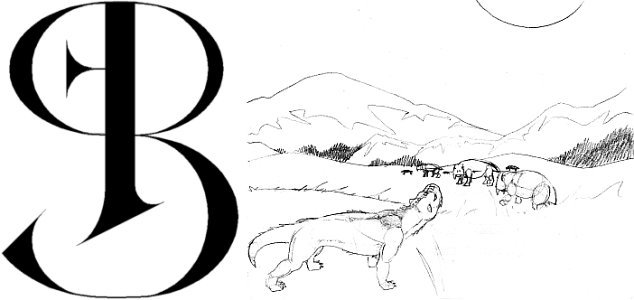
ceratopsian dinosaurs. While most ceratopsians, like Psittacosaurus and Triceratops are stocky quadrupeds, Manticores are gracile bipeds with long limbs and very long tails. Manticores lack the long horns of some of the larger ceratopsians, and they have a proportionally longer neck shield than any other ceratopsian.

Manticore legs are adapted for running, with only three toes on each foot. The hands are four-fingered manipulators with opposable inner and outer digits. The long tail is a specialized weapon with the tip partially fused into a hard, sharp weapon.

The manticore idea is based on creature ideas from RPGs we made before Squawk. Manticores weren't always dinosaurs (and they weren't always called manticores - the original name was unpronounceable by humans.) The beak is a recent addition to make manticores more like their ceratopsian cousins. As the picture above shows, we have been toying with the idea of giving manticores elongated protective scales.
 Manticore legs are adapted for running, with only three toes on each foot. The hands are four-fingered manipulators with opposable inner and outer digits. The long tail is a specialized weapon with the tip partially fused into a hard, sharp weapon.
 The manticore idea is based on creature ideas from RPGs we made before Squawk. Manticores weren't always dinosaurs (and they weren't always called manticores - the original name was unpronounceable by humans.) The beak is a recent addition to make manticores more like their ceratopsian cousins. As the picture above shows, we have been toying with the idea of giving manticores elongated protective scales.


