Showing posts with label intelligent species. Show all posts

Tuesday, March 17, 2009

Intelligent Designs

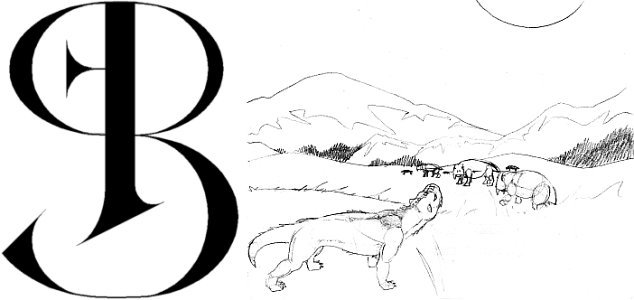
I have uploaded some pictures of the intelligent species along with theories about their origins - specifically their own theories in their own words. One theory based on religious tradition claims that all living things share a common ancestry while the other theory - based on information available to scientists in the Squawk setting - is skeptical about this claim and suggests that complex machines like animals were probably created by simpler machines.

More pictures and controversy...

Friday, December 26, 2008

Squawk Renaming

Within the last year we have changed the naming conventions in the Squawk Role-Playing Game. Many creatures including the intelligent reptilian species of the Squawk setting were often named after well-known monsters from mythology. The new names are designed to be less confusing:
  • Aeolytes, named after Aeolus, ruler of the winds in greek mythology, used to be called rocs.
  • Behemoths, who get their name from the bible (Job 40, suggesting the largest and most powerful animal,) used to be called ogres.
  • Boreans, named after Boreas, the cold north wind from greek mythology, used to be called orcs.
  • Dromes, from a latin root which suggests running, used to be called basilisks.
  • Gafflings, whose name suggests a gaff or hook, used to be called hobgoblins.
  • Gremians, from an English name meaning "enrages", used to be called gremlins.
  • Gygeans, from the Ring of Gyges described in Plato's Republic (which made it's wearer invisible,) used to be called gargoyles.
  • Leviathans, who get their name from the bible (Job 41, suggesting a giant sea creature,) used to be called draconians.
  • Lyndwyrms, whose name suggests lindworm (a wingless bipedal dragon in British heraldry,) used to be called minotaurs.
  • Myrmidons, named for a tribe commanded by Achilles in greek myth and whose name meant "ant-people", used to be called manticores.
  • Orns, from a root word suggesting birds, used to be called gryphons, cockatrices or harpies.
  • Phages, from hematophagy (blood-eating), used to be called vampires.
  • Skand, from the root of words like "ascend" and "descend" (suggesting leaping and climbing,) used to be called kobolds.
  • Strix, from a bird in roman legends that fed on human flesh and blood, used to be called elves.
  • Stygians, from the river Styx which separated Earth from Hades in greek mythology (also used in words like stygofauna to suggest underground water,) used to be called trolls.
  • Titans get their name indirectly from the titans of greek mythology through the english word titanic, suggesting largeness.
  • Zephyrs, named after Zephyrus, the west wind in greek mythology, used to be called unicorns.

Thursday, March 6, 2008

The Manticore Corps

In the Squawk Role-Playing Game, Manticores are intelligent ceratopsian dinosaurs. While most ceratopsians, like Psittacosaurus and Triceratops are stocky quadrupeds, Manticores are gracile bipeds with long limbs and very long tails. Manticores lack the long horns of some of the larger ceratopsians, and they have a proportionally longer neck shield than any other ceratopsian.
Manticore legs are adapted for running, with only three toes on each foot. The hands are four-fingered manipulators with opposable inner and outer digits. The long tail is a specialized weapon with the tip partially fused into a hard, sharp weapon.
The manticore idea is based on creature ideas from RPGs we made before Squawk. Manticores weren't always dinosaurs (and they weren't always called manticores - the original name was unpronounceable by humans.) The beak is a recent addition to make manticores more like their ceratopsian cousins. As the picture above shows, we have been toying with the idea of giving manticores elongated protective scales.

Monday, June 25, 2007

I Played Dungeons and Dragons for Three Hours. Then I was Slain by an Elf.

The intelligent species of the Squawk role-playing game are named after creatures from mythology. Squawk Elves are carnivorous flightless birds with long, powerful arms. Elves can catch prey with the retractable talons of their hands and feet, and break bones with their powerful beak, but they are also intelligent hunters who employ strategy and weapons. The elves were once the masters of a multi-planet dynasty based around electrical technology, but now most elves live in small nomadic bands or minority communities among the other intelligent species.My original concept for the elves was a neckless creature with absurdly massive claws. All four feed would be equipped like the right foot in this drawing. This would make them the "Wolverine" or "Freddy Kruger" of the Squawk universe. (Most of the intelligent species seem to be competing for this position, but the current champions seem to be Gryphons.)

My brother Ulrich developed this alternate visualization of Elf anatomy. In this version, the elf stil has a powerful neck, round body, and similarly-proportioned arms and legs with sharp claws, but the length of the claws is less extreme (but more consistent than my drawings) and the neck is long enough for the head to look around.
Thursday, June 21, 2007

Everybody to the Limit

These were all of the intelligent species of the Squawk role-playing game about a year ago. Since then we have removed a few from the list. Unicorns lacked good art. Harpies were too humanoid. Gryphons and Cockatrices were combined.

This draconian was intentionally anthropormorphized. It's a "teenage mutant ninja Draconian". A more "realistic" draconian would have shorter arms, narrower shoulders and less waist.

"Realistic" renderings emphasize the anatomy of the species and the features that make it unique. Anthropomorphic renderings create characters which are sometimes easier to relate to. (The broad chest sends a message that this draconian is physically powerful.) Squawk creatures in different styles and media and interpreted by different artists give new perspectives, and sometimes lead to improvement in creature designs.